

No room for error
5th December 2025
Important decisions on how England’s land is used must be underpinned by good evidence and a skilled workforce from across the life sciences
The UK is one of the most nature-depleted countries in the world. It is also decades into a housing crisis, where many more homes need to be built to meet demand. On top of this there is growing concern that both domestic food production and import supply are vulnerable to various shocks and pressures.
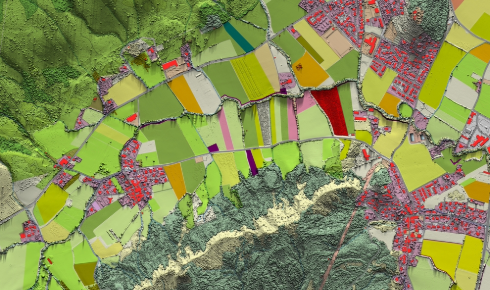
With food production, nature recovery and house building all competing for finite land, effective land-use management is an important and challenging problem. The Government, in announcing its intention to publish a ‘land-use framework’ earlier this year, aims to develop a strategic approach to managing land use in England, giving decision-makers the data required to meet these competing objectives.
The Society recently responded to the Defra consultation on the land-use framework, highlighting the key areas that should be considered in its development and the crucial role the biosciences sector will play.
Food security is a matter of national security, and a reduction in domestic food supply can pose a significant threat through increased reliance on imports, which may themselves be vulnerable to the effects of climate change and geopolitical tensions. There have been many examples of this in recent years, whether involving specific food products or other resources critical to effective food production and supply.
Ultimately, agriculture is being asked to do more with less, as well as ensure resilience to new and emerging pests and diseases whose ranges may expand due to insufficient biosecurity practices and climate change.
Balancing act
However, focusing solely on agricultural output risks environmental damage through intensive fertiliser and pesticide use, both on farmland and surrounding areas. This could result in the loss of essential, long-established natural habitats. The resulting loss of biodiversity could have potentially disastrous consequences for our ecosystems, with knock-on effects for public health and, ultimately, food production.
Technology may offer potential solutions. Enhancing crop characteristics and innovations in production and cultivation can help improve agricultural yields in the face of changing environmental conditions and competing land-use priorities. Government policy, including the land-use framework, should support innovation and its application through proportionate, science-based legislation. Investment in this area is critical, as it will help address some of these national challenges, stimulate further private investment and, ultimately, drive economic growth – a key Government priority.
Building biodiversity
A systems-thinking approach is also essential. The land-use framework and associated development plans must consider the interconnectedness of different habitats, enabling the protection and restoration of species with varied ecological ranges and migratory patterns. Development targets should not take precedence over nature, but should work in tandem to ensure sustainable infrastructure development that has a positive environmental impact, underpinned by expert advice. Failure to do so will not only lead to a negative impact on nature, but will also increase the likelihood of costly environmental damage such as flooding.
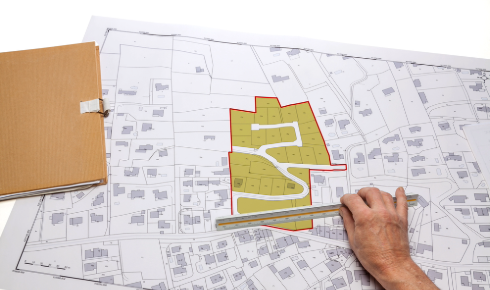 The UK is decades into a housing crisis where many thousands homes need to be built to meet demand
We must also consider the quality of sites where nature is to be protected. There is a huge range of different habitats in England alone, and concentrating conservation efforts on only a few select areas could have severe impacts on overall biodiversity. Once more, sites need to be protected and supported in the long term to ensure sustained environmental benefits and to help meet national biodiversity targets.
What underpins all of this is the need for a skilled, well-equipped workforce with the necessary expertise to ensure decisions are based on sound scientific advice. Any work in this area must consider the whole diversity of life supported by a landscape – from large terrestrial mammals and ancient trees, through to fungi and microbes in the soil. A shortage of experts in any of these fields risks leaving certain ecological niches inaccurately represented in ecosystem assessments, leading to the decline or extinction of crucial species or populations. Similarly, effective training and communication are essential to ensure that those who would benefit from new technologies have the appropriate skills and capacity to use them.
The full RSB response to the Government’s land-use consultation can be found by searching the RSB Policy Resource Library at rsb.org.uk/policy. This is a key opportunity to develop a system that supports people and nature, while maintaining agricultural production and developing quality, sustainable infrastructure. The Society will be closely monitoring the development and publication of the framework as it progresses.
With environmental and economic pressures building, the consequences of mismanaging land use for people, the economy and the environment could be severe, jeopardising key national targets. Expertise from, and application of, biological research will be critical to this process and the RSB will continue to advocate for this sector and its role in a long-term sustainable future.
68% of land in England is used for agriculture
97% of wildflower meadows have been lost since the 1930s
Land-based mitigation could provide up to 30% of the net emissions reductions required of the UK by 2050
Woodland cover is increasing and now represents 10% of land cover in England
Research suggests land use change is the single biggest cause of emerging infectious disease (EID) events worldwide
If you are interested in our work in this area, or our wider science policy priorities, please contact sciencepolicy@rsb.org.uk
Kieran Woof MRSB is senior science policy officer at the RSB