

The forgotten microbiome
5th December 2025
Despite more than half the world living in urban areas, little is known about the soil microbes that support cities’ precious and precarious green spaces, write Aditi Sudhir and Ananya Mukherjee
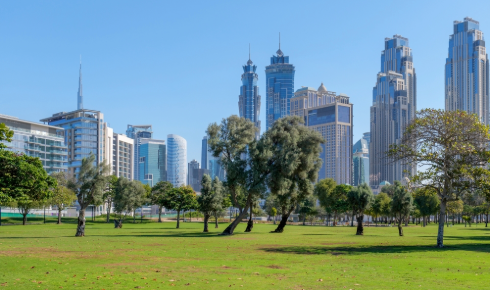
The number of people living in urban areas worldwide is set to rise from roughly 55% today to nearly 70% by 2050¹. As many as 600 million more people are expected to move to cities over this period in India and Nigeria alone. At the same time, the amount of green space in urban areas is declining globally, with data from 62 countries showing a marked reduction in urban green space in 75% of the 344 cities surveyed². It is crucial that we understand the soil systems that support these pockets of green space scattered across the world’s growing metropolises, which are increasingly expected to support biodiversity, enhance people’s wellbeing, and buffer us from rising temperatures and extreme weather events.
Urban environments serve as ecosystems unlike any other, harbouring a unique biodiversity of urban plants, mammals, insects, birds and microbes among huge numbers of people and the infrastructure that supports them. And, while there is no shortage of interest in urban green space from sustainability experts and social scientists, and there is a growing body of research on urban populations of animals and plants, our understanding of the microbial biodiversity of urban soil has not kept up with that of other ecosystems, especially in countries in the global south. To create greener, more resilient cities, we need to understand the complex interactions in the ground beneath our feet and the actions we can take to make it as healthy as possible.
Urban legends
To say that soil systems are complex is an understatement: we are only beginning to scratch the surface of the complex relationship between soil’s health and its microbiota. The structure and function of urban green space microbiota are largely uncharacterised, but research³ suggests that urban microbial communities are more similar to each other globally than to their natural ecosystem counterparts. A typical square metre of urban soil may be more diverse than a non-urban equivalent. Urban green spaces appear to be hotspots of microbial alpha diversity – that is, the richness of diversity of species in one particular area. However, their beta diversity – the species differences across areas of communities – is relatively low, regardless of variations in climate, geography or population.
Urban soils also contain a significantly higher number of plant and human pathogens. The soils face pressures such as disturbance, compaction and pollution, plus management regimes that alter the richness, diversity and evenness of the vegetation found in such spaces. Although there is a growing awareness among park managers of the benefits of planting native vegetation, urban parks are still largely divided into areas of manicured lawns, ornamental shrubs and trees planted for aesthetic purposes⁴.
Non-urban areas are often characterised by undisturbed, native vegetation that tends to support richer, phylogenetically more diverse and ecologically stable microbial communities⁵. In contrast, the vegetation in urban areas is often exotic and is constantly subjected to disturbances such as pollution, replanting and so on. As a result, the microbial community in urban areas typically consists of more stress-tolerant species adapted to these anthropogenic pressures, which can also include factors such as heat islands and heavy metal contamination. For instance, bacterial genera such as Pseudomonas aid pollutant degradation and nutrient cycling, and are often found in urban soils. Conversely, more sensitive genera such as Gemmatimonas⁶ and Chloroflexus⁷ are often associated with non-urban soils. A similar pattern can be seen with microscopic eukaryotes – for example, species in the genus Aspergillus are most abundant in urban soils because they are well adapted to polluted, contaminated soils, while other genera such as Mortierella are associated with forested habitats.
Scientists are just starting to develop frameworks to understand what drives ecological diversity in urban soils⁸. Standardising definitions of urban green spaces, and the protocols for investigating their soil microbiomes, would give a clearer understanding of the homogeneity and help uncover the contribution of various factors that influence their makeup.
Researching the research
Our study of more than 700 research articles on urban green spaces has found a significant geographic bias, with wealthier nations such as the US, Australia and China conducting the most studies in this area. Countries from the global south, despite their enormous biodiversity and booming urban centres, are relatively poorly studied. There was also significant variation in how urban green spaces were defined, with a focus on urban parks and forests, but less research on smaller spaces such as communal gardens and green roofs. In many, identifying the dominant plant species was the focus, with less detail on species diversity, or richness, which can help inform microbial studies. Some studies reported microbes simply as ‘microbial-carbon and nitrogen biomass’ without identifying what they were, and very few reported on eukaryotes such as protists, amoeba and rotifers.
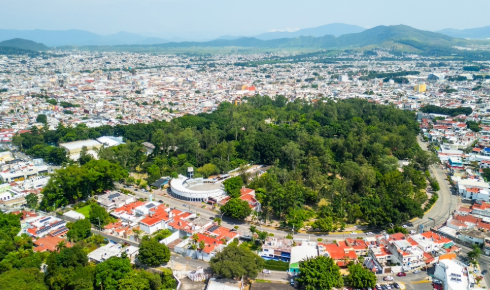 The ‘old friends’ hypothesis suggests humans have evolved alongside environmental microbes, particularly those in soil, with regular exposure crucial for a healthy immune system
Techniques such as high-throughput sequencing and phospholipid-derived fatty acid analysis are aiding the identification of microbes and their role in urban ecosystems. Unfortunately, the lack of a standardised protocol to understand the soil microbiome has made it difficult to compare data sets and draw broad conclusions. As such, consistent sampling depths, definitions of urban green spaces, standardised DNA extraction methods and metadata reporting are imperative in creating a global data set that explains patterns and anomalies. Open-access repositories and collaborative frameworks could also facilitate the process. A wider focus on urban spaces that are not merely parks or forests but playgrounds, green roofs and apartment complexes, especially in the global south, is urgently needed.
Our analysis did note a steady increase in studies focused on soil microbial ecology since 2003, indicating growing recognition of its ecological and health significance. The ‘old friends’ hypothesis suggests that humans have evolved alongside environmental microbes, particularly those in soil, and that regular exposure is crucial for a healthy immune system and for our own microbiome. Could the reduction of such contact in urban settings be contributing to the rise of autoimmune and inflammatory disorders? One study in Finland showed that when forest soil and vegetation was introduced in urban daycare environments, tangible changes in the children’s skin and gut microbiota were observed, highlighting just how significant and beneficial a rich soil microbiome can be for human health⁹. Recent studies have also shown that urban environments such as lawns, playgrounds and parks are acting as reservoirs and spreading points for antibiotic-resistance genes, which need to be carefully managed.
Healthier urban green spaces
To promote soil microbial diversity and ecosystem health, actionable steps are urgently needed. Collaboration between ecologists, urban planners, public health officials and citizens can aid green space management. Encouraging stakeholders such as nursery owners and park managers to plant native vegetation can enhance microbial diversity, as native species are tightly woven into local ecosystems.
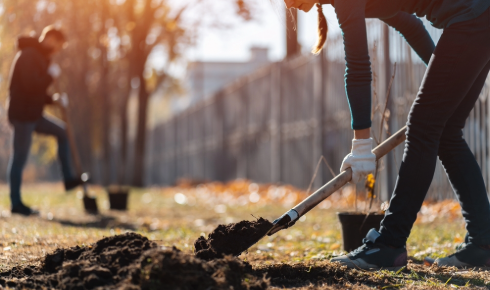 One study in Finland showed that when forest soil and vegetation was introduced in urban daycare environments, tangible changes in the children’s skin and gut microbiota were observed
Furthermore, adopting sustainable practices such as using organic fertilisers, composting, conserving water and engaging in community gardening can allow citizens to actively contribute to healthier soil – and, by extension, create a healthier, more resilient urban environment. Conservation efforts and policy decisions have to start including microbiome health as an indicator of ecosystem vulnerabilities, and restricting the use of chemical pesticides and fertilisers in public green spaces. They also must continually monitor the microbiome to assess the impact of environmental policies and encourage incentives to promote planting native species, reduce pesticide use and so on.
Embedding microbial considerations into urban planning is not just a matter of environmental stewardship: it is a necessary step toward building sustainable, equitable and healthy cities where the vast majority of future generations will live.
1) United Nations Department of Economic and Social Affairs. ‘68% of the world population projected to live in urban areas by 2050, says UN.’ (2018).
2) Husqvarna Urban Green Space Insights. Urban Green Space Report 2024.
3) Delgado-Baquerizo, M. et al. Sci. Adv. 7(28) (2021).
4) Qiao, Z. et al. Geoderma 428 116175 (2022).
5) Zheng, F. et al. Chemosphere 364 (2024).
6) Mujakić, I. et al. Microorganisms 10(1), 151 (2022).
7) Li, M. et al. Ecosyst. Health Sustain. 9 (2023).
8) Nugent, A. & Allison, S.D. Ecosphere 13(3), e3968 (2022).
9) Roslund, M. et al. Sci. Adv. 6 (2020).
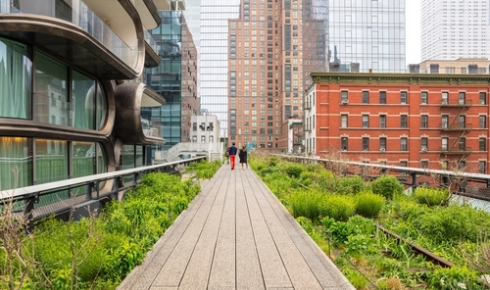
10) Knowledge Hub. From railway track to urban park: New York’s High Line. (2022).
11) McGuire, K.L. et al. PloS One 8(3) e58020 (2013).
12) Ramirez, K.S. et al. Proc. R. Soc. B. 281(1795) (2014).
Dr Ananya Mukherjee is an assistant professor at Azim Premji University, Bhopal, India, interested in algal photosynthesis.
Aditi Sudhir is a molecular biologist at Azim Premji University, Bhopal, India, passionate about microbial mechanisms.