

A future without forever chemicals

5th December 2025
Much of our environment is contaminated with hazardous ‘forever’ chemicals. Diana Senovilla Herrero explores the biological effects of these substances and what can be done to prevent further harm
Unless you avoid listening to the radio or reading the news, chances are you’ve recently heard people talking about substances known as PFAS – or ‘forever’ chemicals. The acronym stands for per- and polyfluoroalkyl substances, a large class of around 10,000 man-made chemicals, often with highly functional properties, such as resistance to heat, oil and water.
These chemicals have been used extensively since the 1940s as surfactants and flame retardants – they are probably in your waterproof jacket, some of your cosmetics and your non-stick pan; they are in stain-resistant carpets, food packaging, wires, hoses, paints and lubricants. Not only are they found everywhere, they are extremely resistant to degradation, so persist for long periods in the environment – hence the name ‘forever’ chemicals.
Recent evidence linking PFAS to toxic effects in both animals and people has put the chemicals in the spotlight, and rightly caused widespread concern about their impact on people and ecosystems. Evidence suggests that exposure to high levels of certain PFAS may lead to health problems such as high cholesterol, fertility issues, impaired immunity and increased cancer risk¹, while environmental tests have found that PFAS in samples of soil and water often reach levels dangerous to health, even in remote regions.
Contamination concern
PFAS can bioaccumulate in the tissues of living things, meaning they bind with a high affinity to proteins in certain tissues of the body and accumulate over time. With a structure similar to that of fatty acids, PFAS can bind to transport proteins in a way that competes with natural ligands, including blood serum proteins, such as human serum albumin, liver fatty acid transport proteins and fibrinogen, which affects blood clotting²,³,⁴. Other proteins affected include nuclear receptors, which are critical to a wide range of processes including cell signalling and gene expression. This binding affects PFAS transport, toxicity and elimination, influencing how they are distributed and stored in the body².
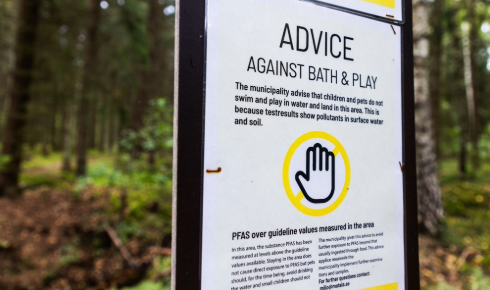 The House of Commons Environmental Audit Committee launched an inquiry into whether enough is being done to address the risks of PFAS exposure nationally and whether Government agencies have the appropriate resources to monitor pollution
Because PFAS are present in drinking water and some of the foods we consume, in most people the rate at which they enter the body is greater than the rate at which we can clear them (research suggests the substances can even be detected in rainwater and in the air). Some studies have found that an alarming 99% of people tested had detectable PFAS levels in their blood⁵.
The bioaccumulation, toxicity, persistence and ubiquity of these chemicals also affect wildlife and ecosystems, creating disruptions in aquatic and terrestrial species and their habitats. In the same way that PFAS can be detected in humans, they are also found in fish, amphibians, invertebrates, birds and mammals⁶. Monitoring initiatives such as the Forever Pollution Project are attempting to provide data from different contaminated sites across Europe to create a map of ‘forever pollution’ and get a better grasp of the magnitude of the problem.
From a policy point of view in the UK, the House of Commons Environmental Audit Committee launched an inquiry earlier this year to explore whether enough is being done to address the risks of PFAS pollution nationally and how we compare with other countries. It will also examine whether Government agencies have the appropriate resources to monitor PFAS pollution properly.
Regulatory challenges
In England, Scotland and Wales, the system for regulating chemical manufacturing, known as UK REACH (registration, evaluation, authorisation and restriction of chemicals), is separate from the European Union’s system, although EU REACH continues to apply in Northern Ireland.
Currently, PFAS chemicals are not regulated under UK REACH, whereas EU policy is advancing rapidly, with a universal phase-out proposal that aims to restrict more than 10,000 compounds. This ban would come into effect some time in 2026 or 2027, and is expected to reduce 83% of current PFAS emissions.
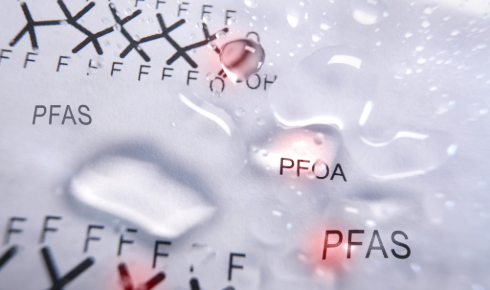 Many people believe PFAS chemicals should be regulated under the UK REACH regulatory framework.
Currently, the UK lacks regulations that set maximum PFAS levels in food and drinking water. Guidelines for safe exposure levels exist, but are often not enforceable by law. A recent BBC investigation found that the UK’s Drinking Water Inspectorate had issued 23 notices to water companies for repeated breaches, affecting up to six million people. To complicate matters further, there are over 10,000 chemicals that fit in the PFAS category – with new compounds being developed all the time that can fall just outside the definition.
Banning PFAS
Individual and combined thresholds for these chemicals need to be established. A suite of remediation and bioremediation technologies are being developed, but the deployment of these on a global scale is likely to be highly complex, energy intensive and extremely costly. The most effective initial measure is a universal ban to stop further contamination.
Such a ban should cover the whole life cycle of PFAS, from production to disposal, and apply to the entire chemical family rather than selected compounds. PFAS are produced in mixtures, meaning the production of even a single type often involves leaching and emission of other PFAS classes. Weak or partial bans also risk ‘regrettable substitutions’, where banned substances are replaced by similar but less well-known chemicals that later prove to be equally harmful or worse. For example, when the PFAS compound perfluorooctanoic acid (PFOA) was banned under the Stockholm Convention on Persistent Organic Pollutants, the chemical company DuPont developed a new PFAS chemical known as GenX, which has turned out to be as bad as or even worse than the chemical it replaced⁷.
Policymakers must also guard against intense lobbying from chemical companies, which could delay or dilute constrains using the ‘big tobacco playbook’ – tactics to add uncertainty, question the science, exaggerate the economic costs and promote the myth that not all PFAS are dangerous.
Resisting these pressures and applying the precautionary principle is essential to protect public health and the environment, while giving businesses regulatory certainty and safeguarding the circular economy from chemical contamination.
One issue in PFAS research is the portability of analytical test methods, and the time that chemical analyses require. In an ideal world, environmental scientists would have access to tools that could provide real-time, in situ measurement of any given environment or sample.
Get involved
Environmental charities such as Fidra, and learned societies such as the RSB and RSC, are contributing ideas to help reduce chemical contamination and urging politicians to develop stringent regulatory frameworks.
At an individual level, people are encouraged to contact their MP, MSP, MS or MLA to encourage action and awareness at a local level, and buy only PFAS-free items. This could include switching to stainless-steel products rather than non-stick pans, and finding ‘clean’ cosmetic and cleaning products. More efficient household water filtration systems could also help.
In extreme cases of PFAS exposure, equally extreme solutions have been proposed, such as bloodletting, the ancient medical practice of removing a portion of blood from the body to treat illness or reduce toxic compound levels. This is invasive and impractical at the population scale, and people’s PFAS levels would soon rise again through everyday exposure to forever chemicals.
Solutions to such a large and complex problem are only possible if we act collectively. Some PFAS chemicals can last for centuries in the environment, meaning chemical pollution today will affect future generations to come. An urgent call for coordinated scientific, political and societal response is needed, for we can only tackle this problem together as a society with the support of scientific evidence.
References
1) Panieri, E. et al. PFAS molecules: a major concern for the human health and the environment. Toxics 10(2), 1–55 (2022).
2) Fischer, F. et al. Binding of perand polyfluoroalkyl substances (PFAS) to serum proteins: implications for toxicokinetics in Humans. Environ. Sci. Technol. 58(2), 1055–1063 (2024).
3) Zhao, L. et al. Insight into the binding model of per- and polyfluoroalkyl substances to proteins and membranes. Environ. Int. 175(107951), 1–13 (2023).
4) Đurđević Đelmaš, A. et al. Perfluoroalkyl acids interact with major human blood protein fibrinogen: experimental and computation study. Int. J. Biol. Macromol. 306(141425), 1–11 (2025).
5) Pavuk, M. et al. Multi-site study of communities with PFAS-contaminated drinking water: methods, demographics and PFAS serum concentrations. Environ. Int. 202(109589), 1–19 (2025).
6) Phillip, A. Understanding per- and polyfluoroalkyl substances (PFAS): environmental persistence, health risks and regulatory challenges. Eu. J. Sci. Res. Rev. 2(4), 199–211 (2025).
7) Ahearn, A. A Regrettable Substitute: The Story of GenX. Podcasts: The Researcher’s Perspective 2019(1) (2019).
Diana Senovilla Herrero MRSB is a QUADRAT PhD student researching PFAS biosensing at Queen’s University Belfast.