

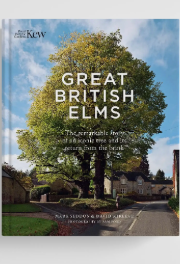
Great British Elms: The Remarkable Story of an Iconic Tree
5th December 2025
Mark Seddon and David Shreeve
Royal Botanic Gardens Kew, £30
The English elm is vastly important to British landscape, art and culture. Genetic analysis suggests the genus Ulmus goes back 80–100 million years, and over the course of human history its wood has been used to create bows, wheels, barns, furniture, floorboards and coffins.
However, since the 1970s it has been susceptible to Dutch elm disease, which is caused by the fungus Ophiostoma ulmi, transmitted by the elm bark beetle, Scolytus, which has led to the loss of millions of trees. Some trees were protected and saved, particularly in East Sussex, and analysis and research has resulted in a degree of re-establishment.
Great British Elms catalogues the majesty of the tree and the range of efforts used in its conservation. I initially worried whether the book would have enough science in it, but that proved groundless – in part due to it being effectively an edited volume with contributions from many experts. These include my former pathology colleagues, Clive Brasier and Joan Webber, with whom I worked in my days as chief executive of the Forestry Commission Research Agency.
Coming from Kew, I guess it is not surprising that the photographic quality and layout are outstanding. It will appeal to expert and lay readers alike, and as there has been no substantive text on the subject since 1983 it has the potential to become the new ‘elm bible’.
Professor Jim Lynch FRSB OBE KHS